The audio and video are in Spanish. These notes are a translation.
Today we are going to talk about a business that is not technology, but grows as if it were technology.
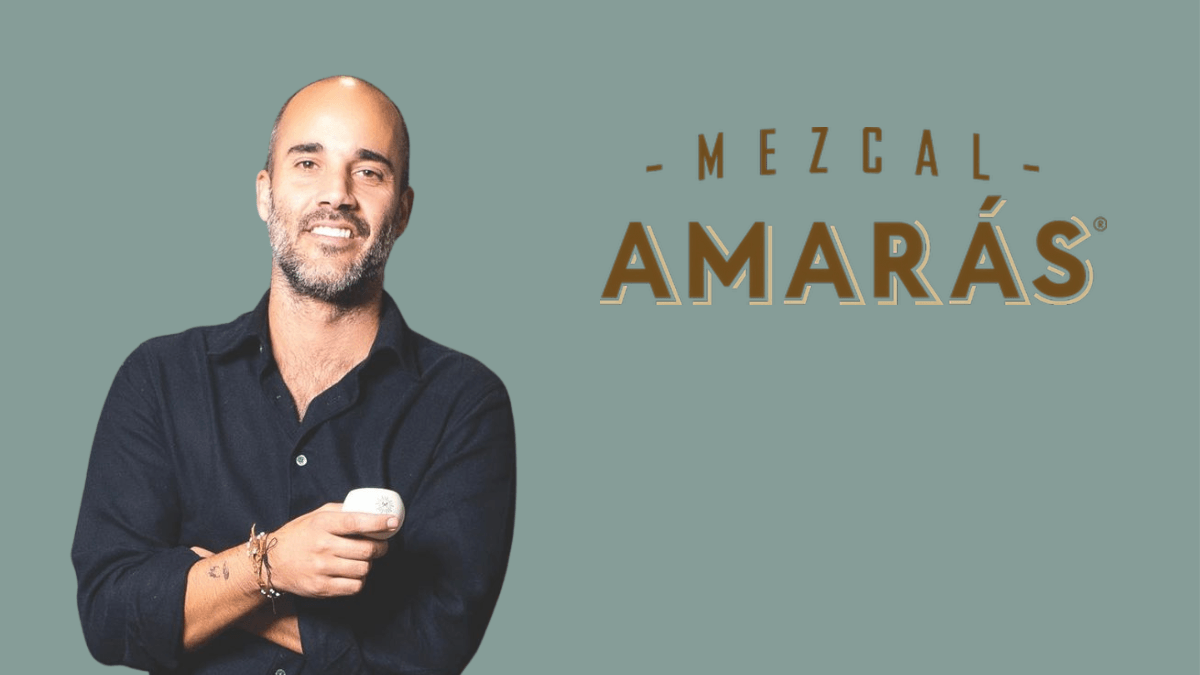
Santiago Suárez is the CEO and founder of Mezcal Amaras. But Santiago did not want to create one more distillery, but rather what he calls the “Uber for the countryside.”
A production model that combines training, financing, and processes to turn agricultural communities into his suppliers. This has allowed Mezcal Amaras, on one hand, to scale the production of an artisanal product and, on the other hand, to empower hundreds of families in Oaxaca.
Born in 2011, today Mezcal Amarás reaches more than 20 countries, exports more than half of its production, and has positioned itself in the top 3 of the best-selling mezcal brands in Mexico.
Today Santiago and I talk:
- About why it is so hard to grow an independent brand in the consumer industry
- About how to compete with innovation, in a sector where few companies control the market
- About his secrets for a scalable business model with an artisanal product
I leave you with this interview with Santiago Suarez of Mezcal Amaras.
Youtube Timestamps*
[02:00] - Introduction to the Alcoholic Beverage Industry
- Let’s start with a “crash course,” a short course on the alcoholic beverage industry in Mexico and the world. How does the value chain work, who are the main players, and where does Mezcal Amaras sit?
Santiago has mentioned that Cuervo (the corporation) is 200 times larger than his brand, and that the competition against the big titans is strong.
- How does he think about the two or three variables in the alcoholic beverage business that have the greatest impact on an independent brand being able to compete against the giants?
- How does speed show up in an industry with agricultural timelines like that of liquor?
It gives the impression that there are no big mezcal brands the way there are in tequila or vodka, but rather that there are multiple small artisanal brands.
- Does Santiago agree? If so, why is it so hard to scale a mezcal brand? Is it a production challenge, or is it that the consumer prefers artisanal brands?
[14:06] - How to Create a Scalable Model
Santiago has described the Mezcal Amarás model as an “Uber for the countryside,” where he has lower CAPEX because the producing communities take part.
- How does this model work, and how does it differ from what established alcoholic beverage brands traditionally do? What specific things has Mezcal Amarás done in the design and operation of its supplier chain, unlike other players?
- In this model, how can you guarantee that the artisanal product keeps a consistent quality when you do not control the whole process and you depend on other suppliers?
Santiago also said they were on the tenth iteration of the model. This is fascinating because it is a physical product that has agricultural timelines.
- What behaviors or practices have allowed them to keep that philosophy of experimentation and continuous improvement?
On the other hand, he has also commented that other artisanal models do not scale because most only seek to maximize profitability in the short term versus the long term.
- What is this idea of maximizing profitability in the short or long term about, and how does it show up in the business decisions he makes?
Alfredo Castellanos of Glisco commented: Amarás “is not technology, but it grows like technology.”
- Besides the scalable model, what other decisions does Santiago credit for Mezcal Amarás’s ability to grow so fast?
[37:03] - How to Grow a Consumer Brand
In 10 years, they went from zero to being in the top 3 of the best-selling mezcal brands in Mexico.
- What were the biggest commercial challenges in growing Mezcal Amarás?
- At the start of Mezcal Amarás, is there any strategy or sales channel that stands out for its effectiveness?
It is getting harder and harder to create consumer brands that resonate, because of how easy it is to reach consumers through social media… and even celebrities like The Rock and Maluma are launching their liquors.
But Arturo Iturbide, Chief Growth Officer of Mezcal Amaras, said that Santiago understands how brands work, what people look for, and how people’s emotions work.
- What have been his biggest learnings about how to create an authentic brand that is a differentiator, something truly unique? What does a brand need today to stand out amid so much noise?
- Is there anything else that Santiago would say, “wow, this was really effective for building this brand that ended up dominating the mezcal market in Mexico”?
There is a fairly strong philosophical, almost political component in the Mezcal Amarás message around respect for the land and Indigenous communities.
- To what extent is it something the market was asking for, versus an idea they have pushed from Amarás as part of their brand?
Santiago has managed to bring major professionals from his industry onto his board, including executives from Bacardi and Macallan.
- What is his secret? How did he manage to connect with these people and convince them to join his company as advisors? And how does he get the most value out of these industry experts who have already lived the movie of growing a business like his?
[48:42] - Round of Rapid-Fire Questions
- If Santiago looks 10 years into the future and puts on the dreamer’s hat, what is the most extraordinary vision for Mezcal Amarás?
Episode Mentions
You can find Santiago on LinkedIn
Discover More from the Startupeable Podcast
Listen to every episode at startupeable.com/podcast.
Subscribe to the newsletter to hear when a new one comes out.
Follow Enzo Cavalie on X: @enzocavalie.