The audio and video are in Spanish. These notes are a translation.
In recent weeks, Peru, my country, has gone through very difficult and violent moments.
Despite this picture, I feel optimistic when I see Peruvians working to reduce the gaps that divide our country.
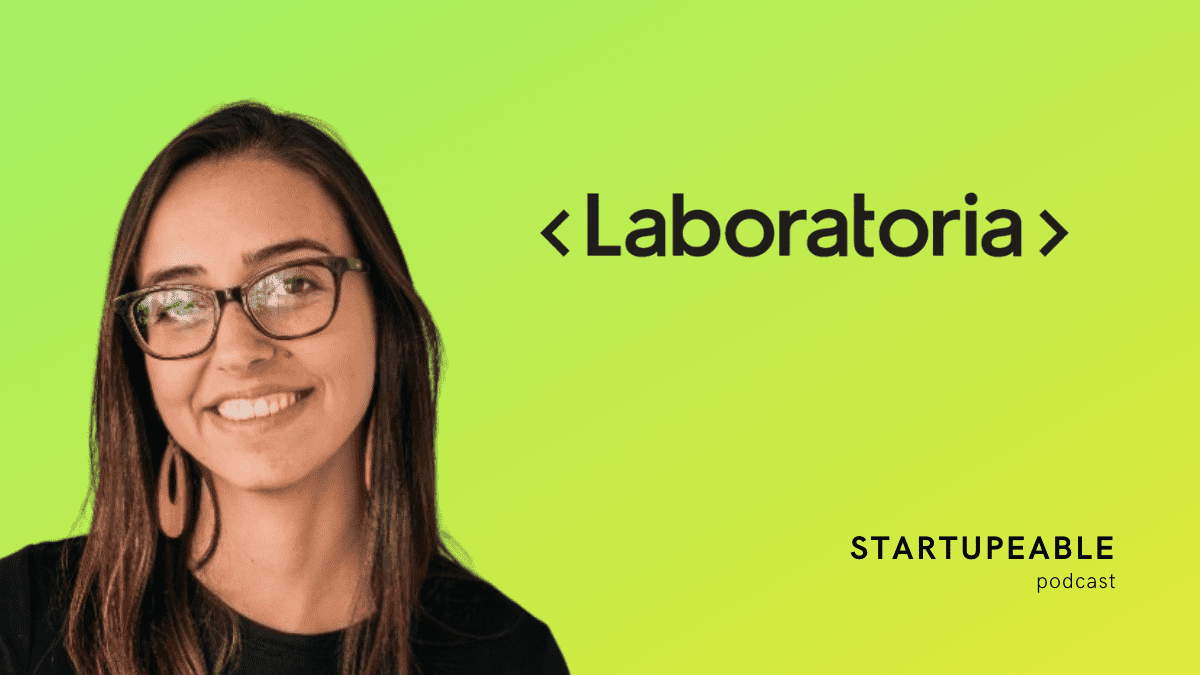
One of those people is Mariana Costa, CEO and cofounder of Laboratoria, a platform that trains women in low-income situations and helps them find jobs in technology careers. To date, it has trained close to 3,000 women who have tripled their income, not only in Peru, but in Mexico, Colombia, Chile, and Brazil.
Laboratoria has also raised more than US $5 million in philanthropic capital from organizations such as Google, the Inter-American Development Bank, and MacKenzie Scott.
Mariana told us why Laboratoria chose to be a nonprofit organization instead of a private company, and the keys to raising philanthropic capital. We also talked about how to build and grow educational products that transform students’ lives.
Youtube Timestamps*
[1:36] - Philanthropic Capital and the NGO Model
-
How did Mariana arrive at the fascinating world of startups?
-
Why did they choose to be an NGO rather than a private company? And how does Mariana advise other social entrepreneurs to think about this decision?
-
What are the advantages and disadvantages of the nonprofit model for generating impact?
-
What mistakes does Mariana see entrepreneurs make when aligning their business model with their impact?
-
How did they fund Laboratoria’s first pilots or MVP?
-
Before Laboratoria, Mariana worked at the OAS, Technoserve, and Ankay, so she already understood the world of philanthropic capital. What recommendations would Mariana give a founder without that background on how to build relationships with philanthropic capital organizations?
[28:23] - MVP and Product
-
When Mariana launched Laboratoria, to what extent was she meeting an existing need, versus creating and educating the market? And what were the main obstacles they had to overcome in their first pilots?
-
Mariana describes Laboratoria as a life-transforming experience, more than an educational program. Why is that distinction important, and how is it reflected in Laboratoria’s product, compared with other bootcamps or educational programs?
-
How do Mariana and her team create a transformative experience in their programs in a remote setting?
-
One of Laboratoria’s particularities is that there are no classes or teachers, and everything is projects. What are the technical challenges of a program of this style? How do you ensure the results and the student’s satisfaction?
-
How does Mariana think about the trade-off between real-time educational experiences versus asynchronous ones, and how are they using technology to enable experiences that are just as transformative, but scalable and accessible to more people?
-
How does Mariana see the future of Laboratoria’s scalability in terms of product?
[53:40] - Growth and Expansion
-
The vast majority of Laboratoria’s students never imagined becoming programmers, because of a lack of access to opportunities or of closeness to the technology industry. What strategies have been effective at generating “awareness” and at steadily cultivating the funnel of potential students?
-
Laboratoria’s success stories are surprising, to the point of being too good to believe. How do they counter the “too good to be true” in their communication and marketing strategy?
[1:00:46] - Rapid-Fire Questions
-
If she had to start a company from scratch, what is the main piece of advice Mariana would give herself?
-
Books recommended by Mariana
-
Changes Mariana would like to see in Latin America’s startup ecosystem
Episode Mentions
You can find Mariana on LinkedIn and Twitter
Recommended books: Beyond Entrepreneurship 2.0 by Jim Collins and When Things Fall Apart by Pema Chodrom
Discover More from the Startupeable Podcast
Listen to every episode at startupeable.com/podcast.
Subscribe to the newsletter to hear when a new one comes out.
Follow Enzo Cavalie on X: @enzocavalie.