The audio and video are in Spanish. These notes are a translation.
The food delivery business is apparently simple: pick up food from one place and take it to another.
Doing it at a scale of millions of users, and profitably, is very hard.
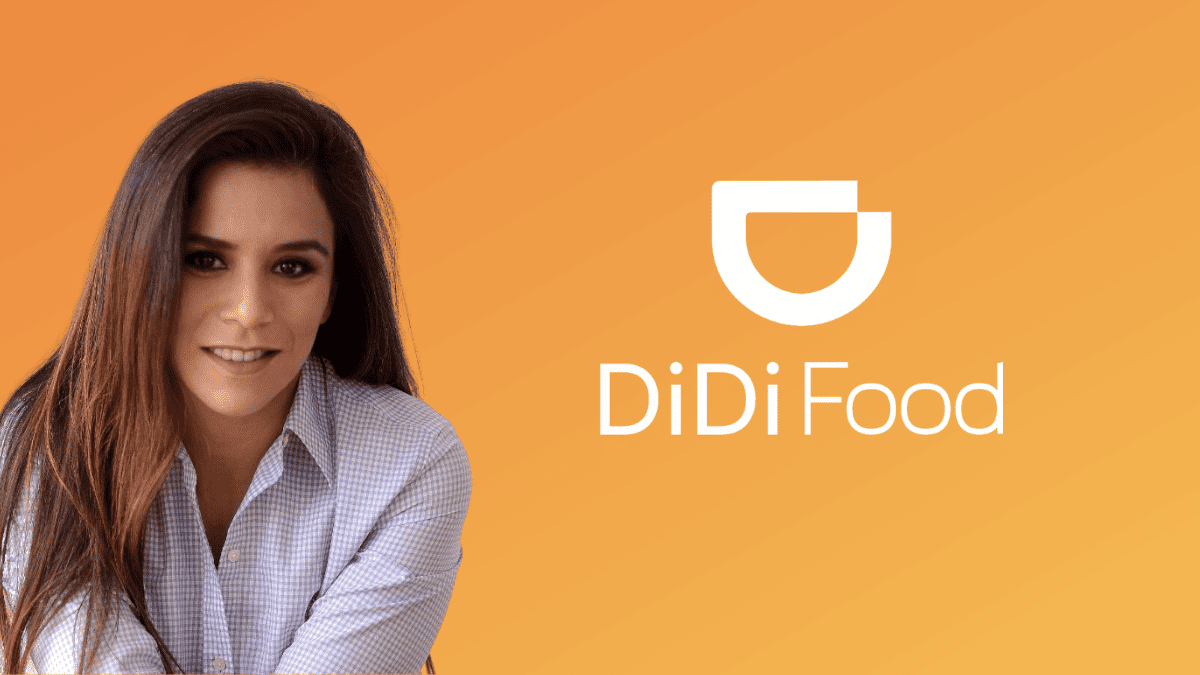
Today we spoke with María Pía Lindley, who led the launch of DiDi Food in Mexico and is General Manager of DiDi Food for Spanish-speaking Latin America.
DiDi needs no introduction. It is the largest mobility startup in China, and in a few years it has positioned itself as one of the leaders in our region.
María Pía gave us a master class on the food delivery business. We talked about creating the product, the operational challenges of a marketplace, unit economics, what her playbook is for expanding into new cities, and the synergies between the food business and the taxi business.
Youtube Timestamps*
[1:46] - A Career in Startups
- How did María Pía get into the fascinating world of startups?
- Before DiDi, María Pía worked at corporations in banking and telecommunications. What was the hardest part of the transition from working at corporations to startups?
- What María Pía’s progression inside the company was like. What have been some of María Pía’s key moments of standing out that led her to her current role as General Manager?
- What has María Pía learned about how to build a career in startups? What practices, mindset, or advice does she give people who are starting to work at a startup?
[14:29] - The Food Delivery Business
- DiDi Food was born inside DiDi. What is it like to lead a business that is born inside a preexisting platform?
- DiDi Food is what is known as a “3-sided marketplace,” where it has users, restaurants, and couriers. What would María Pía say are the biggest challenges of operating a marketplace of this kind?
- What is interesting about the food delivery business is that the “job to be done” is very simple: it is picking up food from one place and bringing it. But there are many details, such as the purchase experience, delivery speed, variety of food, etc. How did they think about and choose the product dimensions that made the difference at DiDi? What did María Pía learn in this process, and what mistakes did they make along the way?
- What were the benefits of DiDi’s existing scale, and how did they apply them to DiDi Food?
- Profitability in the food delivery business happens at scale, but it is quite hard to project that scale and know what the long-term unit economics will be. Especially in a new region. What was María Pía’s experience of building a business in which the unit economics are so uncertain from the start, and how does that affect her later decisions?
[30:25] - Expansion and Operations
- What has María Pía learned about how to launch new cities? Between the first city and the last one they have opened, what factor improved the most in their ability and playbook for launching a city?
- What did María Pía learn about restaurants’ adoption of delivery platforms?
- With restaurants, on one hand you have suppliers such as McDonald’s, which draws a large amount of its own demand but has much more negotiating power. On the other hand, you have neighborhood taquerias that have none of the advantages of a McDonald’s. What has María Pía learned about dealing with restaurants in those two different categories?
- DiDi, both transportation and food delivery, has experienced “hyper growth” in Mexico and Latin America. What operational challenges have they faced in this process, and what lessons has she learned?
[41:56] - Rapid-Fire Questions
- If she had to work at a startup for the first time, what is the main piece of advice María Pía would give herself?
- What has been the most influential book on María Pía’s path through the world of startups?
- Changes María Pía would like to see in Latin America’s startup ecosystem
Episode Mentions
You can find María Pía on LinkedIn
Recommended book: Difficult Conversations by Douglas Stone, Made to Stick by Chip Heath, and Nudge by Richard H. Thaler
Discover More from the Startupeable Podcast
Listen to every episode at startupeable.com/podcast.
Subscribe to the newsletter to hear when a new one comes out.
Follow Enzo Cavalie on X: @enzocavalie.