The audio and video are in Spanish. These notes are a translation.
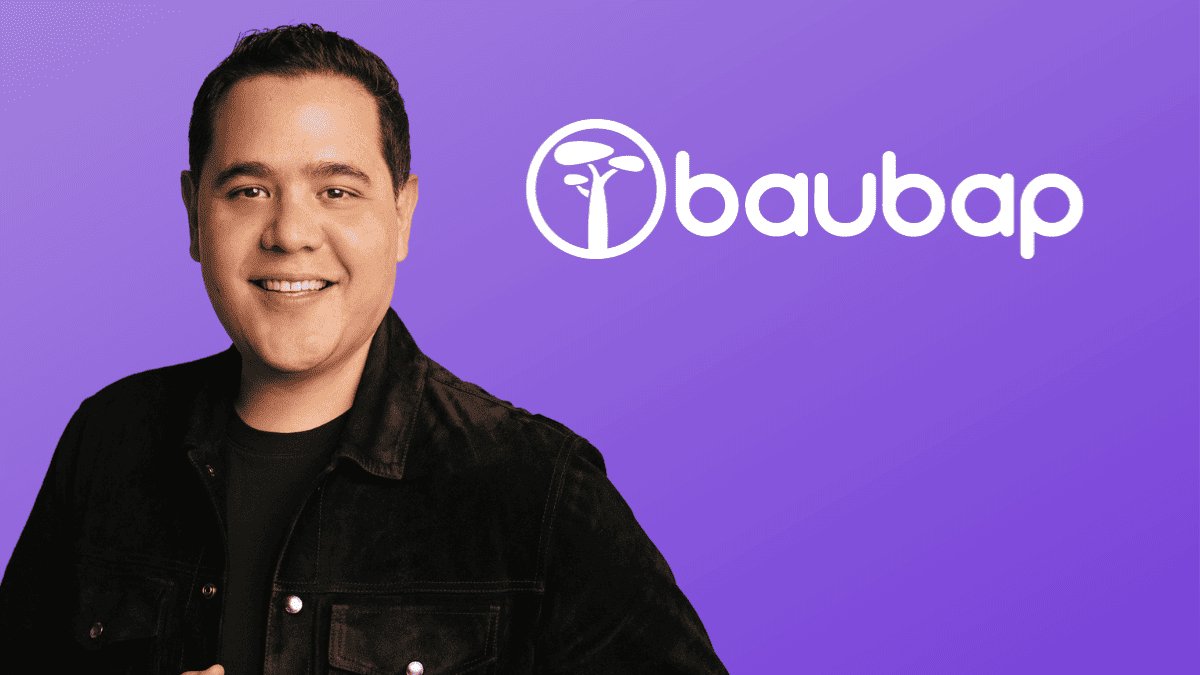
Today I have as a guest Roberto Salcedo, CEO and cofounder of Baubap, a microcredit application with more than 1 million customers that delivers loans of more than 20 million dollars a month.
To date, Baubap has raised more than 3 million dollars from investors like Cathexis Ventures, Y Combinator, and 500 Startups, but it has created a profitable business serving unbanked and lower-income populations, a market segment where many fintechs in Latin America have had trouble creating sustainable businesses.
Today Roberto and I talk:
- About why it is so hard to offer credit in a profitable way to unbanked people, and how Baubap has had success
- About when the right moment is to scale a business, and when it makes sense to raise capital in order to scale
- About how to automate and digitize processes in order to serve thousands of customers without needing to hire people
We also talk about whether or not it is necessary to have a personal connection with a problem in order to start a company, and how that impacts your motivation.
I hope you enjoy this rich conversation with Roberto Salcedo of Baubap.
Youtube Timestamps*
[01:46] - Fintech for the Base of the Pyramid
- How did Roberto arrive at the fascinating world of startups?
- What aspect of starting a company surprised him because of how hard it is?
- What change has he had to make in his personal life to adapt to the speed at which Baubap moves?
Sometimes banks get characterized as “villains” that do not want to serve the population without a credit history… but the truth is that fintechs have not been able to do it either. Financial inclusion in Mexico has not increased despite billions invested.
- In Roberto’s experience, why is it so hard to serve this segment profitably from a business model perspective?
Most credit fintechs have had trouble reaching profitability, especially those that serve the unbanked and lower-income segments.
Today, Baubap has more than 500 thousand customers, is profitable, and places loans of more than USD $20M a month.
- What are the keys that have allowed Baubap to build a profitable and scalable business in this segment?
- How does one arrive at an idea as contrary as not having collections in its product vision?
There is a lot of criticism of credit fintechs because of the high interest rates they charge.
- What is Roberto’s perspective on the topic? From the business point of view, why are such high rates charged, and what is needed at the level of product, distribution, etc. to reduce it?
[39:53] - Benefits of Not Raising Capital
Roberto has said that he thought raising capital would be easy, and it was not.
- Why did he think it would be easy, and why does he think it ended up being hard to raise capital for Baubap?
- What was the value of not being able to raise capital? What things did they have to do at the start, forced by necessity, that today are strengths for Baubap?
Roberto invested a lot of time in trying to raise capital without traction, without a product, without having launched, before focusing on product.
- With what he knows today, how does he recommend other entrepreneurs think about the right moment to go out and raise capital?
- What recommendations does he give to entrepreneurs without experience in the ecosystem for raising capital?
[52:20] - Product Market Fit Methodology
In the first 3 years of Baubap, they were only 3 people. It would be great to understand what their work methodology was prior to Product Market Fit.
- How did Roberto organize his time at the start of Baubap? What were those tasks he spent the most time on?
“When there is no product and no Product Market Fit, only the entrepreneur can receive customer feedback and learn from them, because he has the vision of how that will look in 15 years.”
- What specific tactics did he use to receive customer feedback and learn from them, in the process of finding Market Fit?
Just between Roberto and his partner, they got to serving 4-5 thousand customers. Impressive, the level of digitization and automation of their product.
- How did they get there? What tactics can he share about how to digitize and automate processes effectively?
- How does he think about identifying opportunities for automation and digitization of processes now that he raised capital and has more resources to buy products and hire people?
Roberto has said that they did not have the obligation to scale a business that was not ready to be scaled.
But scaling is not only about having positive Unit Economics. There are processes, people, etc… a whole structure necessary to grow profitably, and very quickly, when you step on the accelerator, it can break.
- How does he think about the right moment to scale?
[01:09:53] - Rapid-Fire Questions
- If Roberto looks 10 years into the future and puts on the dreamer’s hat, what is the most extraordinary vision for Baubap?
Episode Mentions
You can find Roberto on LinkedIn
Discover More from the Startupeable Podcast
Listen to every episode at startupeable.com/podcast.
Subscribe to the newsletter to hear when a new one comes out.
Follow Enzo Cavalie on X: @enzocavalie.