The audio and video are in Spanish. These notes are a translation.
As a kid, and also as a teenager, I spent many hours in front of video games. At some point I dreamed of the idea of being able to make a career in the video game industry. But almost nobody knows how the industry works or how they make money.
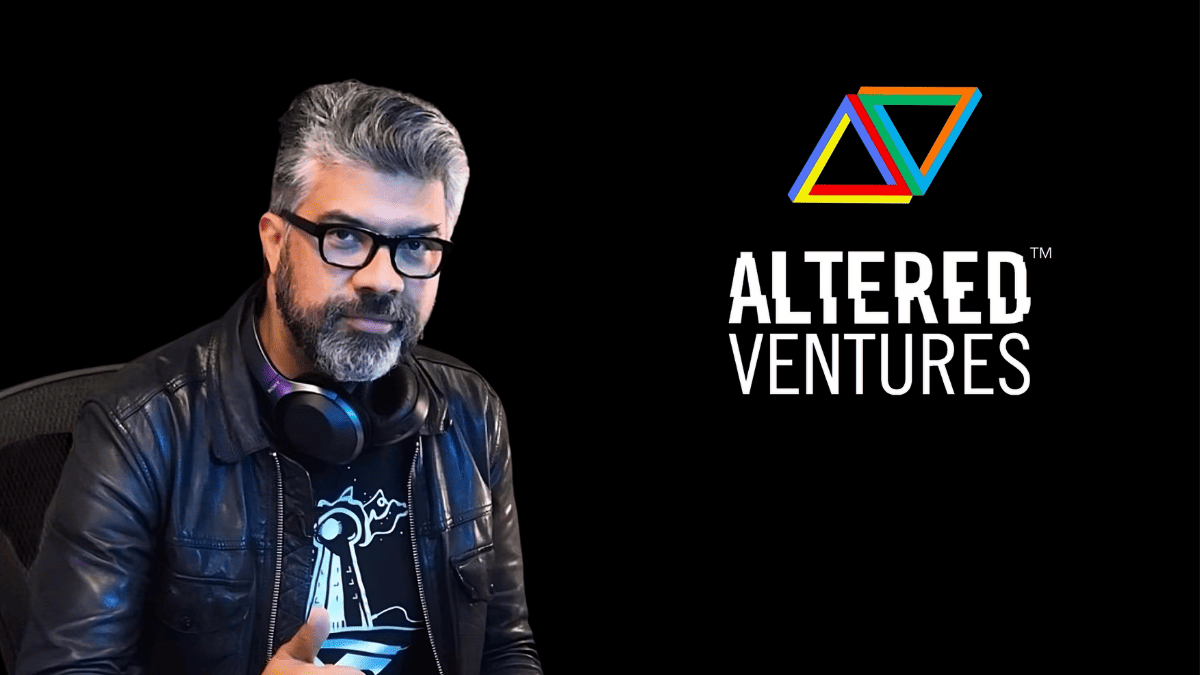
To answer these questions I invited Mario Valle, founding partner of Altered Ventures, an investment fund in independent video games. Mario is passionate about video games and, before Altered, he spent more than 10 years as Director for Latin America and of Business Development at Electronic Arts, one of the giant companies in the video game industry, with titles like FIFA, the SIMS, and Battlefield.
Today Mario and I talk about:
- How the business model of video games works
- What the characteristics are that make a video game successful
- And whether it is possible to make money in video games from Latin America
As a lover of video games, I hope you enjoy this conversation with Mario Valle of Altered Ventures as much as I do.
Youtube Timestamps*
[03:12] - How to Make Great Video Games
- How did Mario arrive at the fascinating world of startups and at that of video games?
Mario has spent more than 20 years playing, working, and investing in video games:
- What makes a video game fun? If he had to split the components behind the fun of a video game, what would they be?
- What does it take to hook the consumer?
- From the consumer’s point of view, do they also prefer games that can give them value over time and not only in the moment?
After hundreds of hours playing sports games like FIFA and multiplayer role-playing games like Diablo.
- Is there any game pattern or design that stands out as the most successful? Are those patterns a “winning” formula for making video games, or is creating them still an art, even if an existing pattern is there?
To understand the skills that are needed to create successful games that he evaluates in the teams he invests in:
- How is creating entertainment through a video game, where one interacts, different versus a more passive form like a film? Do the creative geniuses behind video games possess some skill very different from the one you might find in a Hollywood director or something along those lines?
[34:47] - The Video Game Business
For the entrepreneurs or investors who are completely uninformed about the video game industry:
- How would Mario describe the main characteristics of the business model of modern video games? What are the most important things that someone who is not familiar with this market should understand?
Mario has played several roles in the video game industry. On one hand, that of distribution at Electronic Arts, and now in development and investment at Altered Ventures:
- What are the different parts of the value chain behind the creation of a video game? There are the platforms like Sony, the distributors like Electronic Arts, and the creative studios like Santa Monica studios. What is the role of each one, and where is the money? Who are the ones that earn the most?
- From the user’s perspective, why does the independent studio have an advantage in creating a game that is more interesting, versus the big international studio?
- When an indie game succeeds, is it usually in order to sell to the local or the international market? What does success look like for these independent video game developers?
20 years ago, people bought discs for US $30 or $60, which was a big expense without knowing whether you were going to like the game.
Today, more and more, games are free to play and have monetization levels for different types of users.
- How has the evolution of the monetization model been: how much people pay, how they pay, and the margins that result in the video game business?
Let’s talk about the role of platforms. Many started playing on PC, then moved on to the Play Station, and then the mobile phone emerged. Those are probably the three dominant platforms today.
- What things does Mario think companies unrelated to games can learn from the big video game companies?
[01:13:04] - The Future of Games in LatAm
In Latin America many parents used to say that their children were wasting their time playing, and today you hear the numbers that the video game industry is bigger than music or film.
But it feels distant… there are few people who have made significant money in this industry from Latin America.
- Can you make money in video games from Latin America?
Going back to the value chain: the platforms, the distributors, and the studios.
It seems hard to compete in the first two segments from Latin America due to the limitation of capital and talent.
- Does Mario agree? Where does he see the opportunity for Latinos who want to start companies and create businesses in the video game industry?
Voice, image, and video cloning technologies have emerged, like MidJourney, Runway, and Elevan Labs. You do not have to be a genius to imagine how far they could go.
Technology is making the friction of taking what you have in your head and bringing it into the world smaller and smaller.
- How does Mario think this is going to influence the type of video games that are created, and also the ones that are in demand?
[01:23:49] - Rapid-Fire Questions
- If Mario looks 10 years into the future and puts on the dreamer’s hat, what is the most extraordinary vision for Altered?
Episode Mentions
You can find Mario on LinkedIn
Discover More from the Startupeable Podcast
Listen to every episode at startupeable.com/podcast.
Subscribe to the newsletter to hear when a new one comes out.
Follow Enzo Cavalie on X: @enzocavalie.