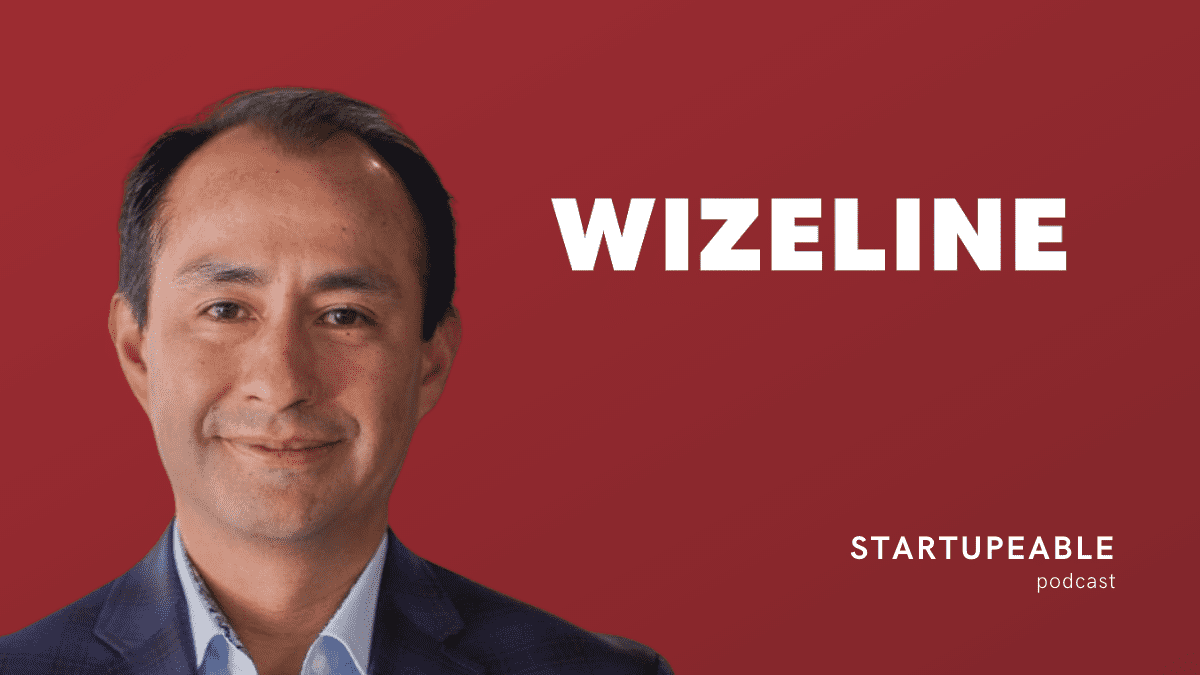
The audio and video are in Spanish. These notes are a translation.
Choosing to work at a startup is similar to investing in a startup. If you choose the right one at the right time, you will have large returns.
That was the case for today’s guest, Bismarck Lepe, who joined Google among the first 200 employees. This experience catapulted Bismarck’s career and left him with a network of contacts and invaluable lessons that he later used to become a founder.
Bismarck is CEO and cofounder of Wizeline, a technology services company that helps businesses design and build digital products, and he has raised more than 60 million dollars from funds such as Apax Digital, Sierra Ventures, and LEAP Global Partners.
We talked about the start of his career at Google, the lessons he learned during that stage, and how he made the decision to start a company. He also told us what his experience was like raising capital during the 2009 financial crisis, when he received more than 170 rejections.
Youtube Timestamps*
[2:25] - Building a Career at Google
-
How did Bismarck arrive at the fascinating world of startups?
-
Bismarck joined Google in 2003, in a context after the internet bubble, as one of the first 200 employees. How did he evaluate the decision to join Google despite a pessimistic context for the technology sector?
-
How would Bismarck recommend that young people think about joining or staying at a startup? How should they evaluate the company, the opportunity, and the team?
-
Bismarck had a standout trajectory that allowed him to raise capital from recognized investors such as Ron Conway. What were the key inflection moments that helped him stand out and changed his trajectory inside Google?
-
After Google, Bismarck founded his own companies: Ooyala and Wizeline, in addition to investing as an angel in dozens of startups. What did Bismarck learn about how to build a successful career at a startup?
-
In several interviews, Bismarck often comments that “network is net worth,” which, in Spanish, means “your network is your wealth.” What is his secret? What does Bismarck believe he genuinely does differently from other founders that has allowed him to connect and build relationships with people as successful as Sheryl Sandberg and Chris Sacca?
[21:34] - From Employee to Founder
-
Bismarck has said that he always wanted to start a company and that he had many ideas while he was at Google. How did he make the decision to leave Google, and what were his biggest fears?
-
Google gives engineers a lot of power and responsibility because they are the ones closest to the problem and to customers. What were the most important lessons about building digital products that Bismarck took from Google and applied at Ooyala and Wizeline?
-
Bismarck comments that Google today has become one more corporation, full of politics. Is it inevitable to end up there when you grow as much as Google?
-
According to Bismarck, what was in Google’s culture that made them create innovative ideas?
-
Bismarck commented that Google’s culture was very data-driven. What is his philosophy on the use of data to build products? How do you identify when to follow the data and when not to?
[34:04] - Raising Capital in a Crisis
-
Bismarck did 173 pitches, and only the 170th invested in him. What went through his head as he received no after no, and how did he keep his conviction during the fundraising process?
-
A few months ago, the chances of raising capital were considerably higher across sectors, stages, and founder profiles. Today the bar has risen significantly: How does Bismarck think founders should think about the probability of raising capital?
-
In the current context of falling investment, how does Bismarck suggest thinking about the trade off between raising more capital or taking greater dilution?
-
What other advice would Bismarck give a founder walking into a pitch meeting with an investor in the current context?
[44:15] - Rapid-Fire Questions
- If he had to start a company from scratch, what is the main piece of advice Bismarck would give himself?
- What has been the most influential book on Bismarck’s path through the world of startups?
- Changes Bismarck would like to see in Latin America’s startup ecosystem
Episode Mentions
You can find Bismarck on LinkedIn
Podcasts mentioned: All In Podcast and Pivot
Discover More from the Startupeable Podcast
Listen to every episode at startupeable.com/podcast.
Subscribe to the newsletter to hear when a new one comes out.
Follow Enzo Cavalie on X: @enzocavalie.