The audio and video are in Spanish. These notes are a translation.
Why do some applications feel like magic and others like a puzzle to decipher?
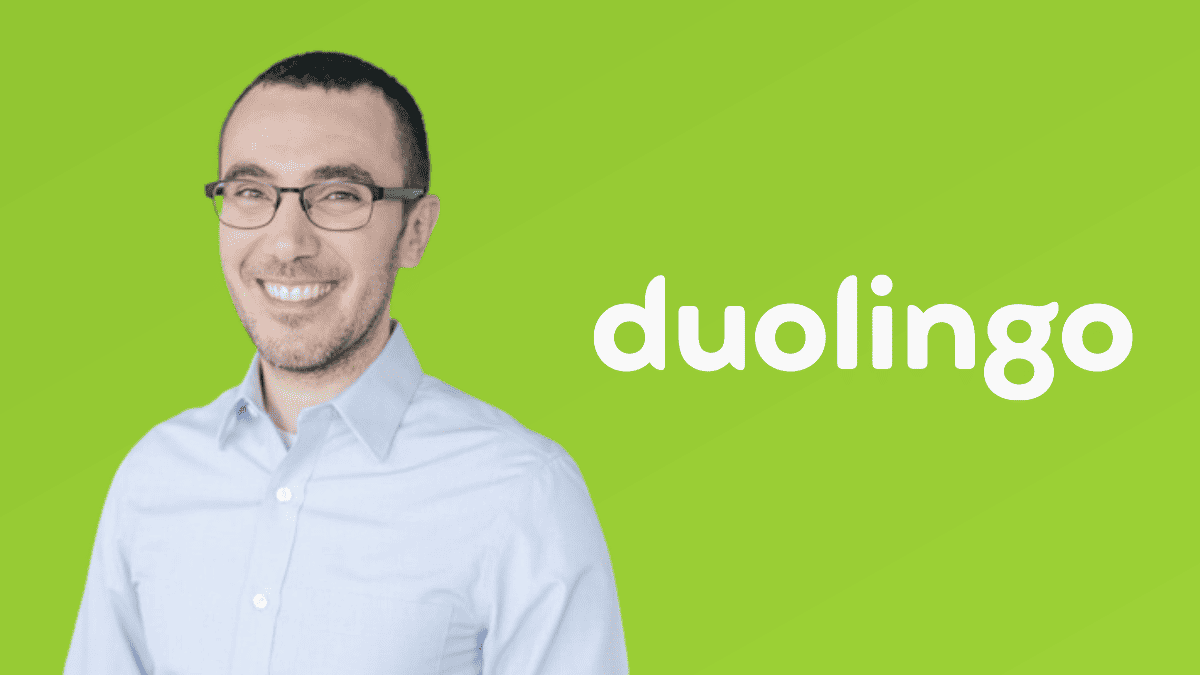
Today, we are going to go deep into the secrets behind those products we cannot stop using. I spoke with Jorge Mazal, former Chief Product Officer of Duolingo.
We talked about what Jorge learned building products that people love.
From the key skills to be a successful product manager, to the integration of artificial intelligence into product management.
We also talked about the balance between data-based decision making and intuition.
If you are a founder looking to build a product that people love, this interview is for you.
Youtube Timestamps*
[1:06] - Product Management Career
- How did Jorge get into the fascinating world of startups?
- Jorge explained what product management is and what a product manager does, for people who do not know these terms.
Jorge has had the chance to work with great professionals and product management experts at companies such as Zynga, MyFitnessPal, and Duolingo.
- What skills are required to be a great Product manager?
- To be a Product Manager at a company, do you need deep knowledge of the business?
Everyone talks about empathy with the user, about knowing how to listen to the user, and about the famous “product sense,” but sometimes these are mentioned as if they were talents you are born with:
- How can these skills be practiced?
- What would he recommend to someone interested in a career in product management who wants to get their first practical experiences?
- Does a Product Manager need to know how to code? Can they rely on No Code tools or Chat GPT?
[13:18] - Product Philosophy
- What were the most important lessons he took from each job he had about how to make a great product?
Many founders and professionals are working on edtech, healthtech, or fintech startups, which are difficult sectors where you ask the user to do something that costs them in the short term in exchange for a benefit in the long term, such as learning a language, having good eating habits, or saving money.
- What has he learned about attracting and retaining users in products of this kind?
Duolingo is known for a strong culture of data-based decision making. They even had their own internal experimentation tools because Mixpanel was not enough for them, but Duolingo is already an established company with hundreds of millions of users.
Today, Jorge is an angel investor and an advisor to early-stage startups.
- What does Jorge think can be learned from Duolingo’s data culture that is applicable to a startup that is just starting?
Jorge has mentioned that at Duolingo you cannot implement something that has not gone through an AB test, unless it has been approved by someone in leadership.
- How does he think about the balance between a data driven culture versus a culture where people have the confidence to follow their intuition and make ambitious bets, perhaps against the data?
Startup investors, especially in Silicon Valley, like “product minded” founders, that is, founders who put most of their time and attention focused on the product.
Jorge had the chance to work directly with Luis, the founder of Duolingo:
- What are those traits or patterns in common that founders who are truly focused on the product share?
Jorge has told the story of how Luis noticed that a pixel was missing on a screen. But in startups, people usually celebrate lean startup and “move fast and break things.”
- What is the role of perfection in product management? When is it good, when is it bad?
Duolingo is one of the Edtech companies best known for using artificial intelligence from back before it was sexy:
- How does he think the product management profession will evolve as a result of artificial intelligence?
[38:54] - Building Product Teams
At the beginning, the product leader is one of the company’s founders. Eventually, companies hire a product manager, head of product, or product leader, but that “timing” is highly variable.
There are companies that hire product leaders from the start, others at the seed stage, others at Series A.
- When is the right moment to hire a first product leader, and what should you look for in that professional?
As the company scales and hires more people, it is common for founders to drift away from customers and from the product. And this tends to be the kryptonite of startups.
-
What has Jorge learned about how to keep that from happening?
-
How does Jorge maintain that closeness with the members of his team, especially as the number of people grows as quickly as it usually does at startups?
[49:21] - Rapid-Fire Questions
- If he went back to the start of his career in technology, what would be the main piece of advice he would give himself?
- How is he preparing to adopt artificial intelligence?
- What would he like to change about the world of startups?
Episode Mentions
You can find Jorge on LinkedIn
Discover More from the Startupeable Podcast
Listen to every episode at startupeable.com/podcast.
Subscribe to the newsletter to hear when a new one comes out.
Follow Enzo Cavalie on X: @enzocavalie.