The audio and video are in Spanish. These notes are a translation.
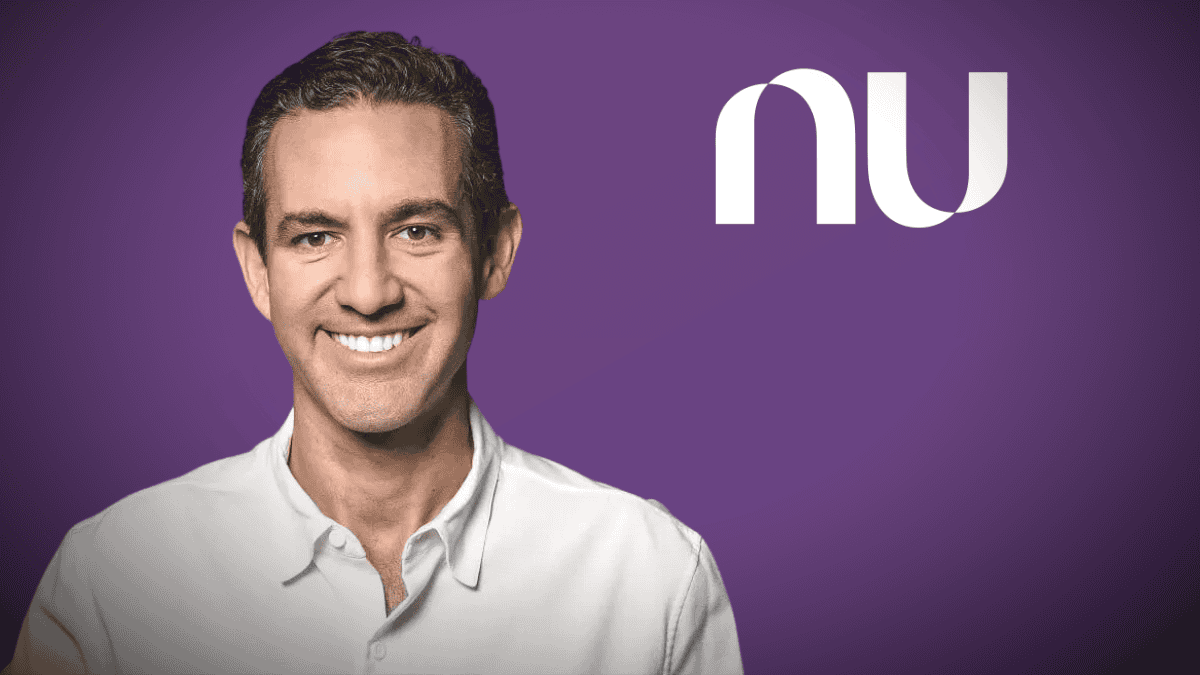
This is the story of David and Goliath, or rather, the story of David Velez and the Latin American banks.
In 2013, David founded Nubank in Brazil with the vision of building the country’s first digital bank without branches.
But very few people believed in his vision. David was not Brazilian, nor an industry expert, and no Latin American investor believed it was possible to create a digital bank in the region, let alone beat the most powerful companies on the continent: the banks.
Youtube Timestamps*
[2:53] - Personal Sphere
Luis Garza is a friend of David’s who mentions that David is a balanced person, but balanced at the extreme: he is driven, but a great friend, an athlete, demanding of himself.
- What is balance for David Velez? And how has that definition evolved in these first 10 years of Nubank?
When he founded Nubank, David devoted all his time to the company. Now, he leads more than 6,000 employees while balancing his life with his wife and children.
- What has David learned about disconnecting from work?
David seems to embody his life purpose, but this carries the risk of tying his identity to a venture that had a high probability of failure.
- For David, what is the balance between personal identity and business success?
[11:37] - Lessons from Sequoia and Nubank
David worked for three years alongside one of the most legendary Venture Capital investors, Doug Leone, at the most legendary firm, Sequoia.
- Are there any values or practices of Sequoia as an investor that David would like to see more of in Latin America’s venture capital industry, in order to raise our ecosystem?
David has told the story of his first interviews many times, and he realized that Sequoia Capital is a fund that cares a great deal about the human being.
- How did Sequoia handle the relationship with David as a founder?
In a context of limited resources, many founders tend to prioritize immediate needs such as generating sales, and they postpone the design of their culture.
- How does David think startups can integrate those cultural principles in a context of limited resources?
From the start, Nubank’s communication was the complete opposite: simple, rebellious, young, more like a movement than a marketing campaign.
- What have been the biggest lessons on how to do marketing and build a brand that stands out amid so much noise?
Over the last 10 years, Brazil has created unique conditions for the fintech ecosystem to flourish, allowing Nubank to get past regulatory challenges and a near shutdown.
- What has David learned about handling regulatory and political issues while expanding Nubank across Latin America? What does David think is necessary in other countries so that governments can create a similar base that lets fintech ecosystems flourish as they have in Brazil?
Although it looks easy, raising capital for Nubank has been a constant challenge. Even today, with the company publicly listed, David keeps traveling to different countries in search of investors.
- What has David’s experience raising capital been like? What has been hardest for David to convey in order to build investor confidence in Nubank’s story and potential?
[37:13] - Impact Financing Model
- How did David reach the conclusion that philanthropy was the best vehicle for making an impact on those sectors, unlike the private company model as with Nubank?
The sectors that reduce inequality, such as education and health, are hard for sustainable businesses. Just as with Nubank, David managed to attract the best talent and capital to financial services.
- How can incentives be created so that Latin America’s best talent works and builds companies in those sectors?
The people who most need better products and services at more affordable prices are precisely the ones with the fewest resources.
- How realistic is it to expect the best founders to build for the base of the pyramid and become large companies? Or what is the right model for bringing technology and innovation at scale to the people who need it most?
Through the VélezReyes+ philanthropic platform, David has invested in startups and nonprofit organizations working on education and leadership.
- How comparable are the challenges of for-profit and nonprofit scale-ups, according to David?
- What concepts does David think are transferable from the world of startups and venture capital to the world of philanthropy and social impact?
[44:21] - Changing Latin America’s Culture
David is literally giving everything he has to try to solve some of the region’s biggest problems.
-
What are the biggest impediments to solving these problems, beyond resources? Perhaps things that, for David, are outside his control, but that do not let him sleep.
-
What have you learned about the capacity to aspire? If we wanted to multiply the level of ambition of leaders and founders in Latin America, what would we have to do?
Episode Mentions
You can find David on Twitter and LinkedIn
Recommended book: No Rules Rules, by Reed Hastings and Erin Meyer, Start with Why, by Simon Sinek, Blue Ocean Strategy, by W. Chan Kim and Renée Mauborgne
Discover More from the Startupeable Podcast
Listen to every episode at startupeable.com/podcast.
Subscribe to the newsletter to hear when a new one comes out.
Follow Enzo Cavalie on X: @enzocavalie.