The audio and video are in Spanish. These notes are a translation.
Today’s guest studied at Stanford and worked in San Francisco, but curiously he did not start a startup, but an NGO…
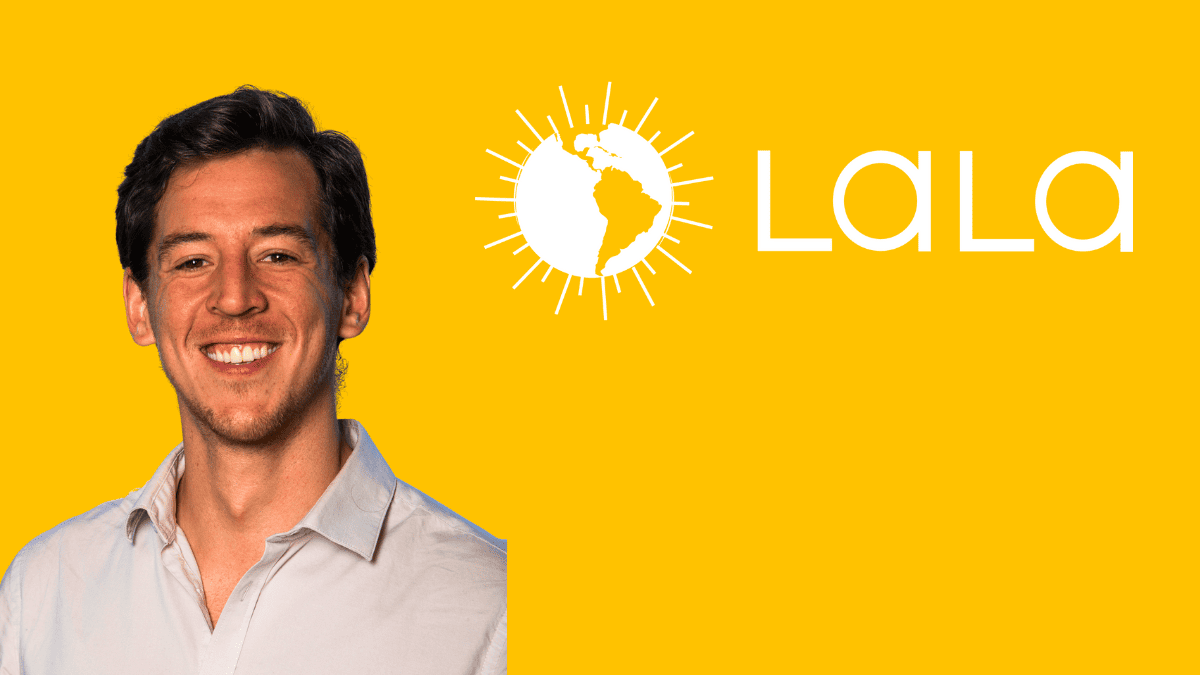
Diego Ontaneda is CEO and cofounder of Latin American Leadership Academy (or as I call it, the YCombinator of youth leadership in Latin America).
LALA (for its initials in English) identifies high-potential young people between 14 and 20, many of them from low-income and marginalized communities, and empowers them with entrepreneurship and leadership skills and opportunities so that they solve Latin America’s most urgent problems.
To date, LALA has supported more than 2,200 leaders from 17 countries and has the philanthropic backing of entrepreneurs and investors from firms such as Nubank, Rappi, Kaszek, and Accel.
In this episode we talk about:
- How to identify leadership potential in young people
- What the most effective predictors of potential are and what questions reveal it
- And how LALA has found talented young people in unconventional places
In addition, Diego told me what the challenges are of scaling and raising philanthropic capital for a nonprofit organization.
I am convinced that founders have to develop the skill of finding talent in people that established companies ignore or underestimate.
Diego and LALA are experts at that and I am sure you will learn a lot from their experience.
Youtube Timestamps*
[01:37] - How to Find Young Leaders
Diego did his MBA at Stanford, lived and worked in San Francisco… of all the things he could have ended up doing, an NGO is the one you would least expect.
In a speech 4 years ago, he said that in his time in Africa he found “one powerful idea that if it worked, it could change the world.”
- What was that idea?
This idea is a model in which young leaders are trained and given resources so that they carry out projects to solve problems in their communities.
It is the opposite of the traditional development theories followed by organizations such as the Inter-American Development Bank or the Bill Gates foundation, where they try to solve a specific problem such as malaria, in a more “top down” way.
- Diego explains to us the reasons these more “top down” models have failed, because they seem like simpler models to apply.
- What validation has he seen that this new model is better than the traditional ones? Both in LALA’s case, and in your experience in Africa.
LALA accepts young people both from the 5% of Latin Americans who have access to opportunities, and from the 95% who do not.
- What differences does he see between the problems each group tries to solve?
It sounds like the Y Combinator of social entrepreneurship. In large part, LALA’s superpower is identifying young leaders before anyone else.
- How do they identify young people who are a fit for LALA? What are the predictors of leadership potential that they give the most weight to in the admissions process?
- How much does the difference in communication skill between young people with few resources and those with high resources play a role in LALA’s admissions process?
On the other side:
- What has Diego learned about filtering candidates in the admissions process? What are the most effective predictors that a candidate will not be a good fit?
Startups have to do talent arbitrage, that is, find talent where others are not looking or that others do not value. Otherwise, if they want to hire the best talent, they will have to pay very dearly or convince them to work for less, which is very difficult for a startup.
- Are there some characteristics that LALA evaluates in this talent that companies (corporates or startups) maybe do not value in the same way?
LALA has the idea of empowering the people close to the problems to solve them, versus a more top down model of development.
By design, this implies that for LALA to succeed, you need a greater diversity of leaders who understand a diverse set of problems.
- Where does this talent mainly come from? Are there some places that are consistently more effective for LALA’s recruiting?
Diego has said that being a social entrepreneur or working in social impact is not seen as a successful career in Latin America.
It seems like a challenge of marketing, of stories, and of role models.
- How do they think about changing that at LALA? How is it reflected in their program?
Diego is working very hard on the aspects you can control from within LALA, but if we evaluate the problem at a more macro level:
- What does he believe are the biggest impediments to new entrepreneurs and social leaders emerging in Latin America? Maybe things that are outside his control, but that keep him up at night.
[44:44] - Model and Financing
Something unique about LALA is that they have been able to attract philanthropic capital from important foreign investors and families, especially those related to venture capital and technology.
- Why did he choose the nonprofit model over that of a private company? What are its advantages and disadvantages for generating impact?
Diego is working on a strategic change to increase LALA’s scalability.
- What are the most difficult challenges of scaling a nonprofit organization and how are they addressing them?
One of those challenges is financing and philanthropy. Diego briefly mentioned the case of David Vélez, who signed the giving pledge in 2021.
- Is he seeing greater interest from families or economic groups in the region in getting more involved in philanthropy?
[55:32] - Quick Questions Round
- If Diego looks 10 years into the future and puts on his dreamer hat, what is the most extraordinary vision for LALA?
Episode Mentions
You can find Diego on LinkedIn
Discover More from the Startupeable Podcast
Listen to every episode at startupeable.com/podcast.
Subscribe to the newsletter to hear when a new one comes out.
Follow Enzo Cavalie on X: @enzocavalie.