The audio and video are in Spanish. These notes are a translation.
On Startupeable, I have interviewed several of the leading venture capital investors in Latin America. These funds usually invest in the early stages of a startup, that is, a seed round or Series A… but what happens after the Series A? Then come the so-called Growth rounds, where mainly international funds invest.
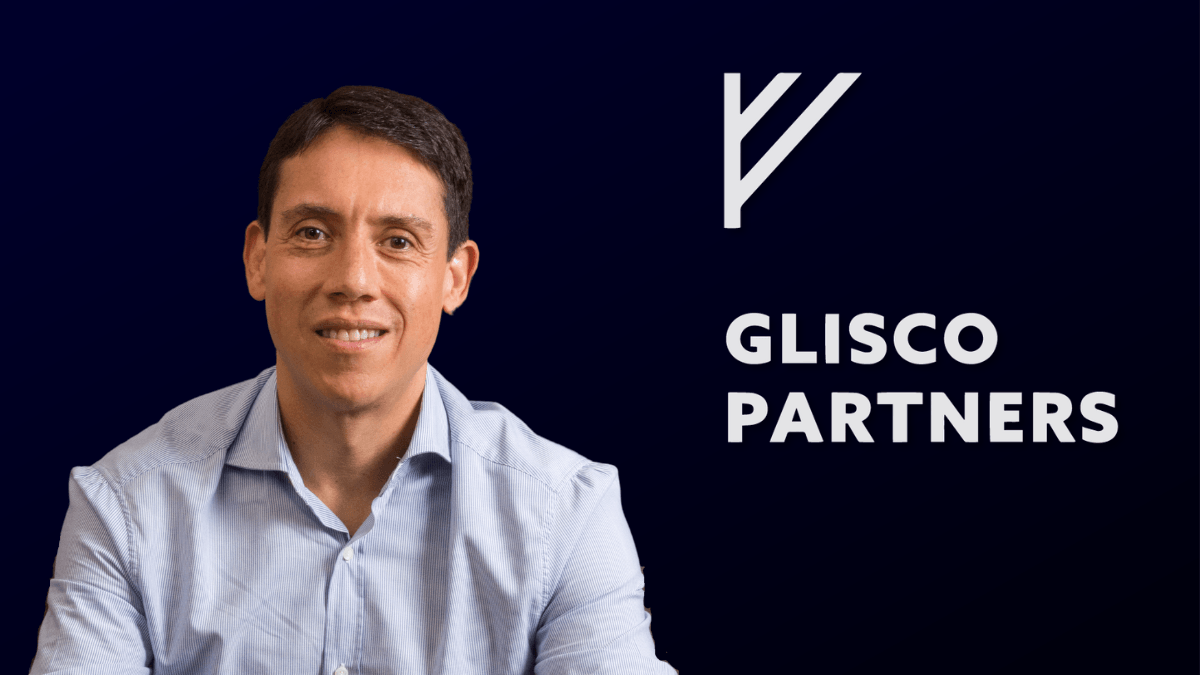
Today, I sat down to talk with Alfredo Castellanos, Managing Partner of Glisco Partners, one of the leading Growth Equity funds in Mexico.
Glisco manages close to 800 million dollars across five funds and has companies such as Kueski, Zebrands, Yalo Chat, and Muncher in its portfolio.
In this episode we talk about:
- What a Growth fund looks for in a company
- And what its differences are with Venture Capital
- How Glisco’s thesis has evolved from investing in more traditional companies toward digital businesses
We also talked about the current state of the investment market in Latin America.
I enjoyed this interview a lot because few investors share in detail the growth and profitability metrics they look for in a business, the way Alfredo did today.
So I hope you enjoy our conversation.
Youtube Timestamps*
[01:29] - Intro to Growth Equity
- How did Alfredo get into the fascinating world of startups?
- How did the experience of founding a startup in 2000 affect the way he sees investments?
The line that divides Venture Capital and Private Equity is blurry.
That is why we have to start by locating the financing cycle of a startup at the point where Glisco operates.
- At what stage in the life of a company does Glisco invest? And what does the company look like at that moment in terms of sales, product development, business maturity, etc.?
Glisco has been investing for 20 years and recently they have started to focus more on digital and innovative companies.
- To draw a timeline of the Mexican economy over the last 20 years, what would the most important stages be and how has Glisco’s investment thesis evolved in those stages?
Two years ago, there were multiple growth funds investing in Latin America, with Softbank out in front and hedge funds such as Tiger Global, Coatue, among others.
Today most of those funds are almost out of the region.
- How would Alfredo describe the state of growth equity today in Latin America? Are there companies going out to raise capital? Are investments getting closed?
- How has the bar for raising a growth equity round changed between two years ago and today?
The counterpoint is that there is less competition for investments and, therefore, more favorable valuations and terms can be found.
- In this context, what keeps new growth investors from taking an interest in Latin America? Is it only because of the rise in interest rates?
[25:15] - Evaluation of Investments in Growth Equity
Alfredo commented that he does not want to take the risk of profitability, or that the company does not raise a next round of investment.
By contrast, a venture capital fund looks for an investment to grow quickly over a period of 5 to 10 years, so they usually do not value profitability as much.
- What criteria does Glisco use to evaluate an investment and how do those criteria compare with the ones an early-stage investor takes into account?
- What profitability expectations does a growth fund have? And how does this mental model influence the way you do diligence on a company?
In the early stage, valuations are more art than science.
It is more a pricing exercise that depends on how much capital you want to raise, and on the supply and demand there is for your company.
- How does Alfredo think about valuation at the stage where Glisco comes in?
- What is his exit expectation for the companies he invests in?
As a growth fund, in many cases they are the last large investor before the exit. So they are an important promoter of exits.
- How does Glisco help its companies prepare and execute their exit strategies?
In Alfredo’s experience:
- What are the main limits on a company’s growth? What has he learned from seeing these companies and the different growth strategies they have implemented?
- Is there a behavior or pattern in those extraordinary CEOs that produces this ability to focus?
[46:09] - Trends and Sectors
Glisco led Luuna’s Series B. People thought the pandemic was going to hit Luuna hard, and it turned out to be the complete opposite.
At the same time, there was an explosion of investment in logistics infrastructure, fintech, and software for e-commerce, which brought a lot of competition.
- How does Alfredo see the e-commerce sector in Mexico today, especially from an investment perspective? Is it an interesting sector to invest in?
- Are there opportunities to create Luunas in other categories?
They also invested in Yalo Chat, conversational commerce software for large companies.
It gives the impression that the Software as a Service market in Latin America is still small and that both adoption and contract sizes are limited.
- How far along is the region in the adoption of digital products and services at the company level, and how much opportunity exists?
[53:21] - Quick Questions
- What would he like to change about the world of startups in Latin America?
- Within 10 years, what is the wildest vision for Glisco?
Episode Mentions
You can find Alfredo on LinkedIn
Discover More from the Startupeable Podcast
Listen to every episode at startupeable.com/podcast.
Subscribe to the newsletter to hear when a new one comes out.
Follow Enzo Cavalie on X: @enzocavalie.