The audio and video are in Spanish. These notes are a translation.
You have surely heard people say that Latin America is a region of very distrustful people, but it is rarely discussed how that distrust translates into costs for our region’s digital economy. If people do not trust, it is very hard for them to decide to buy or sell through digital platforms such as Rappi, Cornershop, or Kavak. It is precisely in this problem that the startup Emptor found an opportunity.
Emptor is a Software as a Service platform that performs identity verification and background checks in an automated, fast, and reliable way. To date, it has raised close to one million dollars from venture capital funds such as Dila Capital and Angel Ventures. Thanks to Emptor, e-commerce, marketplaces, and fintechs companies can generate the information and the transparency needed for us, as customers, to trust these Internet platforms.
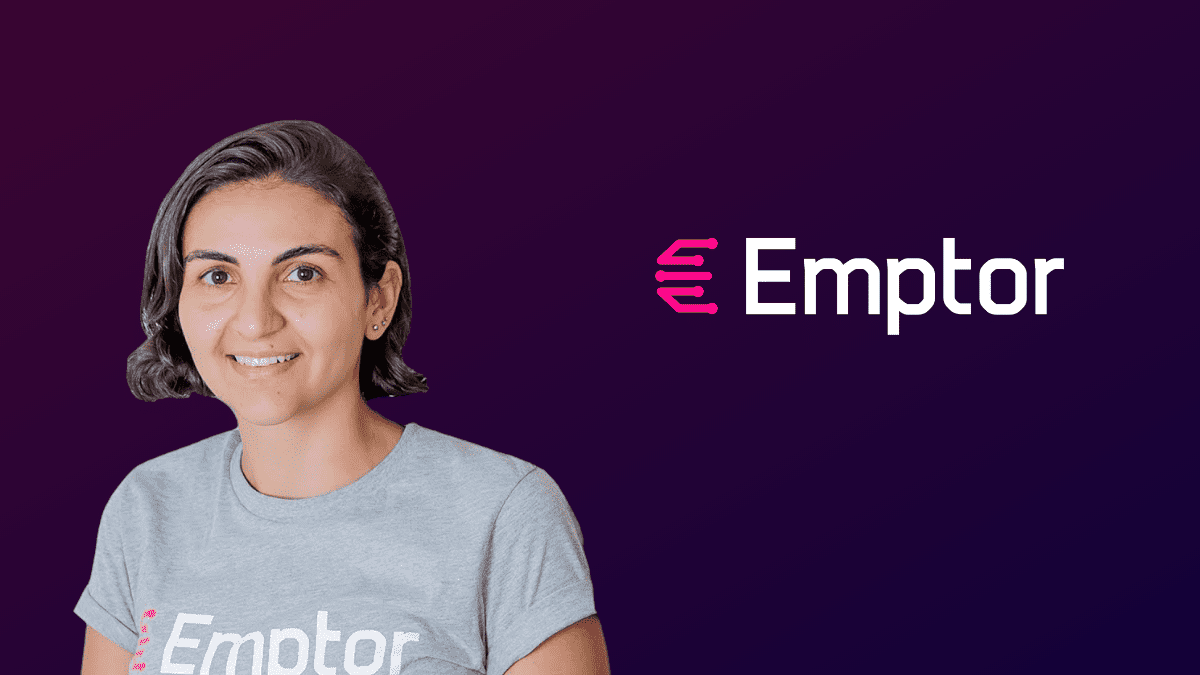
Today we talk with its COO and cofounder, Oriana Fuentes, about how distrust creates costs for companies, how Emptor closed important large customers from the start, and the criteria for deciding between self-financing your startup and raising capital.
What You Can Learn Today
- Building a B2B MVP
- Planning and executing international expansion
- Deciding whether to bootstrap vs raise capital
If you like the podcast, the easiest way to help us is by leaving a review with ⭐⭐⭐⭐⭐ on Apple Podcasts. It takes less than 1 minute and helps us convince the hardest guests to land, such as David Vélez, CEO and founder of Nubank, whom we would love to interview.
Youtube Timestamps*
Emptor and the Business of Distrust
- [1:24] - How did Oriana arrive at the world of startups?
- Career in investment banking on Wall Street
- Interest in and approach to technology
- Master’s in Machine Learning
- [2:54] - What is Emptor?
- API for automatic background and identity verification
- Trust among consumers and between consumer and company
- Half a million background checks a month, 13M so far
- [4:27] - How did they come across the problem?
- Distrust in Latin America
- Need to provide trust to consumers in many sectors
- [6:02] - Distrust in Latin America and its cost to the economy
- Crime and fraud
- The Mercado Libre case
- Labor costs and brand or prestige costs
- [8:05] - What is the cost of digital distrust for companies?
- 70% unbanked in Latin America
- The obstacle of a lack of digitization
- A barrier to reaching more customers
- [9:22] - What do the following markets have in common, in terms of distrust and information infrastructure, that makes them attractive as customers?
- Solving problems with high social impact
- Similarity in infrastructure and cultural aspects
- Growth in consumer interaction with fintechs and other digital solutions
Emptor’s B2B Sales and International Expansion
- [11:31] - What was the process of building Emptor’s MVP like, and how did they get their first B2B customers?
- A cofounder who is an expert in MVPs, and no sales team
- Experience working with large companies
- [12:44] - What were the first products like?
- Peru as the first market before expanding quickly
- Companies with needs in several countries
- [14:13] - What is their sales process like, and what lessons have they learned along the way?
- Segmentation of companies
- International technology companies vs traditional ones
- The digitization process inside traditional companies
- [15:30] - What is the segmentation process like?
- Technology companies
- Emptor for product
- Emptor for operational improvements
- [17:40] - What criteria do they use to prioritize the countries where they decide to invest in expansion and product?
- Business opportunities by market size
- Importance of covering the region’s larger countries
- Different infrastructures across countries
- Opening in a country is motivated by a customer, or it is proactive because of the market
- [20:08] - What has been key for Emptor’s expansion into other countries to be so efficient?
- Appetite for expansion from the start
- Balance of resources for operating and expanding
- Clarity on finance and business concepts
- Focus on quality when recruiting
- High level of talent retention
- Growing without raising capital
- [22:28] - How did they keep clarity on pricing, the business model, and roles within the team from the start?
- Discipline in how resources are invested
- Orderliness and profitability
- Talent retention and remote work from before the pandemic
Bootstrapping vs Fundraising
- [25:03] - What led Emptor to bootstrap at the start, and why did it eventually decide to raise capital?
- Greater access to contact networks and companies in Latin America
- Getting into the market
- Learning how to raise a round, and learning from investors
- [26:59] - Competitive dynamics of the market and their influence on the decision to raise capital
- Having a product that works well
- Losing focus on what the raised capital is invested in
- International reach and understanding of customers
- A business that cannot be accelerated with money
- [29:59] - Under what criteria would you again make the decision to bootstrap or raise capital?
- Bootstrap in SaaS with a technical team
Tweet Round
- [31:24] -
- Recommended books: Deep Work: Rules for Focused Success in a Distracted World, and Digital Minimalism: Choosing a Focused Life in a Noisy World, by Cal Newport
- Changes in Latin America’s startup ecosystem: greater investment in women
- Founder to interview: Susie Ferreira of Tiny
Episode Mentions
You can follow Oriana on LinkedIn.
Recommended books: Deep Work: Rules for Focused Success in a Distracted World, and Digital Minimalism: Choosing a Focused Life in a Noisy World, by Cal Newport
Founder to interview: Susie Ferreira of Tiny
Discover More from the Startupeable Podcast
Listen to every episode at startupeable.com/podcast.
Subscribe to the newsletter to hear when a new one comes out.
Follow Enzo Cavalie on X: @enzocavalie.