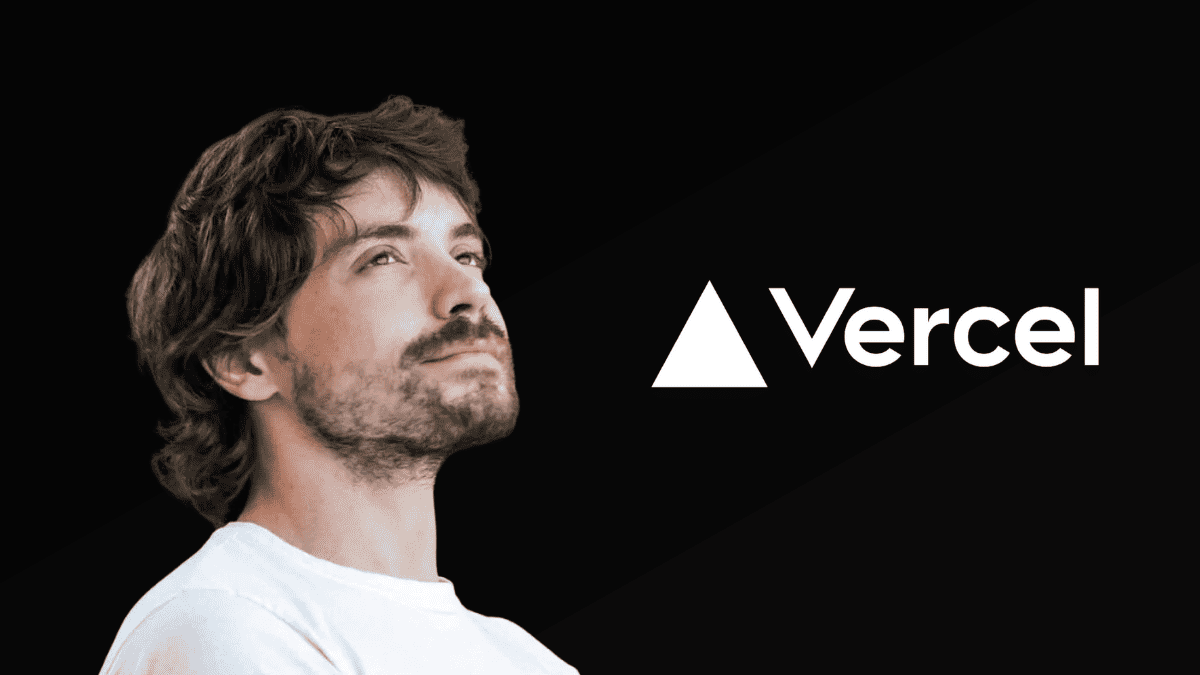
The audio and video are in Spanish. These notes are a translation.
Few can say they created a product that marked a before and after in their industry.
One example is NextJS, an open source web development technology used by giant companies such as TikTok, Netflix, and Notion to build applications that are fast and globally scalable, and it was created by an Argentine entrepreneur.
Guillermo Rauch started his career as a software developer at age 11 and, at 21, sold his first company to Wordpress.
Today, Guillermo is founder and CEO of Vercel, a cloud platform for front end development from which he leads NextJs. Vercel has grown exponentially and multiplied its sales by 25 times over the last 3 years.
In the interview, we talked about what his process was for creating a disruptive product like NextJS and how to balance the responsibilities of being CEO with staying involved in product. We also talked about how programming is evolving as a result of the rise of artificial intelligence and what the right mindset is for adapting to technological changes.
Youtube Timestamps*
[1:33] - Guillermo’s Story
-
How did Guillermo arrive at the fascinating world of startups?
-
Geoff Lewis of Bedrock Capital told us that he invests in stories that go against the conventional. From where Guillermo is today, and looking back, is his personal story a narrative violation?
-
Guillermo sold his first startup to Wordpress at 21. What did he enjoy most about that stage, and what did he enjoy least? And what lessons did he take away?
[11:16] - Building Product
-
If Guillermo had to draw a timeline of the history of web development, what would he say were the most important advances and technologies before Nextjs?
-
What is Nextjs, how does it relate to Vercel, and how did it represent a paradigm shift?
-
How Guillermo started working on the idea of Nextjs. What were his first steps?
-
What role did user feedback play in the development of Nextjs? How did he know when to listen to them and when not to?
-
Guillermo comments that it is easier to sell a company a product that adds a budget line, instead of replacing an existing line. What does this idea consist of, and how is it reflected in the way he built Vercel from the start?
[44:11] - The Future of Development
-
An idea Guillermo has shared lately is that the backend is becoming a commodity. What practical implications does that have for someone who today is starting a startup or developing a digital product?
-
How does Guillermo imagine the future of software development, and what would he do differently if he had to learn to program all over again?
Episode Mentions
You can find Guillermo on LinkedIn and Twitter
Discover More from the Startupeable Podcast
Listen to every episode at startupeable.com/podcast.
Subscribe to the newsletter to hear when a new one comes out.
Follow Enzo Cavalie on X: @enzocavalie.