The audio and video are in Spanish. These notes are a translation.
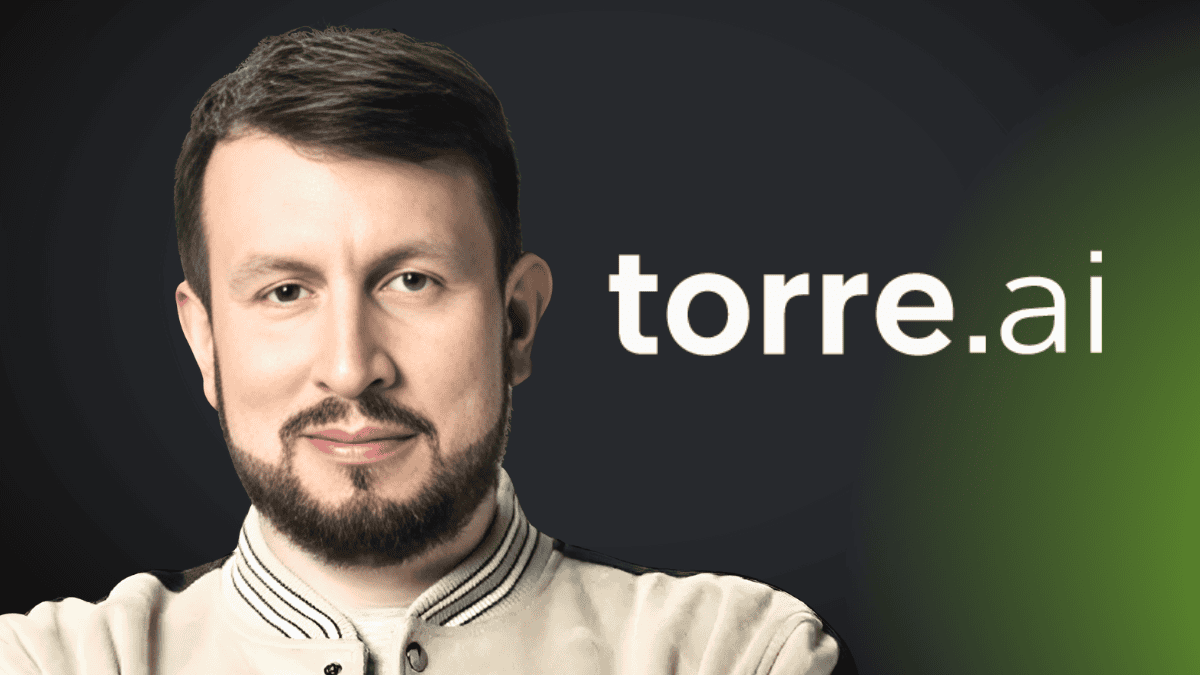
Today I spoke with Alex Torrenegra, CEO and founder of Torre, and a Shark on Shark Tank Mexico and Colombia. His story is inspiring: from his humble beginnings in Colombia, where he founded his first business at 14 to buy himself a computer, to becoming a successful founder in the U.S. Alex has founded multiple million-dollar startups, including Voice123 and Bunny Studio, and he currently leads Torre, an innovative AI-powered social network for the job search, with the ambition of revolutionizing the job market.
Youtube Timestamps*
[4:12] - Future of AI in LatAm
The first two companies Alex founded, Voice123 and Bunny Studio, are in sectors (actors’ voices and creative freelancers) that seem perfectly “ripe for disruption” by artificial intelligence solutions.
- How does Alex think about the industries or businesses that are more vulnerable to being replaced by AI, and those that are less vulnerable?
- What does Alex believe will be the optimal combination or interaction between the work of artificial intelligence and the work of people?
A few months ago, news came out that Klarna, a large fintech, launched an AI assistant that could do the customer support work of 700 full time agents.
In Colombia, around 700,000 people are employed in call centers. Obviously, news like this is only the beginning.
- How well or poorly would we say Latin America is prepared to take advantage of the artificial intelligence wave and the impact it can have on our region?
Alex has been building companies from Silicon Valley for more than 20 years and, a few years ago, got deeply involved in Shark Tank Colombia and now Mexico.
- Are there any values, practices, or mindsets among founders in Silicon Valley that Alex would like to see more of in Latin America’s startup ecosystem?
Alex mentioned something interesting: “LLMs can have much more impact in Latin America than in other countries such as the U.S.”
- Could Alex explain this idea, what his thesis is on AI adoption in Latin America, and how he is thinking about opportunities?
[32:10] - Creating Products with AI
With Torre AI, Alex has been working for more than 5 years, with millions invested in artificial intelligence, to replace recruiters and help people find work.
-
What are some of the lessons Alex has learned about how to create products with artificial intelligence? For example: which mistakes NOT to make, what to pay attention to, etc.
-
What have been the most important changes in how Alex and Torre work, in terms of creating products, forming teams, doing marketing, etc., as a result of the arrival of AI?
-
How has Alex dealt with resistance to change, and with the way things were done inside his teams, in order to make the most of the power of AI?
-
Has Alex seen any foundational mistakes (technological, cultural, processes, etc.) that founders make which later keep them from making the most of artificial intelligence’s potential?
[53:40] - Bootstrapping vs Venture Capital
- How does this affect the capital needs of new startups? Does this mean they need 2X, 3X, 5X times less capital? Will they skip rounds? How does Alex expect this to shape the venture capital industry?
Something curious about Alex is that he has built companies in multiple ways: bootstrapping with no money, bootstrapping once he already had money, venture capital, etc.
For Torre, for example, Alex has raised several million dollars of investment, but he has also put in a good amount of the capital.
- How does Alex think about which projects or businesses are worth bootstrapping versus raising capital?
Working at a U.S. venture capital firm that invests in Latin America, you meet many founders solving important problems with technology, but whose businesses will grow to $5M, $10M, maybe $20M, a size that is not enough for venture capital.
But LatAm’s GDP per capita is one tenth of the U.S., so there are not as many billion-dollar markets, but they are still big problems to solve.
- Is venture capital the right financing model for technology entrepreneurship in the region? What does Alex think about this?
Alex mentioned: “Two founders who are the same. One who bootstraps will be happier than one in venture capital.”
- Why? How should one evaluate the two paths, taking into account the more personal side, such as family and stage of life?
Some founders and investors say that building a business of 10 or 100 million requires the same level of energy and work. So, why aim to do something smaller?
- Do you agree with this?
The venture capital model requires aiming for the stars, so, past a certain amount of capital raised, outcomes become binary. For investors, doubling or tripling their money is not enough: they need a 10X or more. This means the founder has to take more risks in their decisions.
- What is Alex’s personal relationship with risk?
Alex mentioned that he worked 85 hours a week, but the truth is that, unlike when he started Voice123, he does not need to…
- What is balance for Alex? And how has that definition evolved over the more than 20 years he has been building companies?
Episode Mentions
You can find Alex on Twitter and LinkedIn
Discover More from the Startupeable Podcast
Listen to every episode at startupeable.com/podcast.
Subscribe to the newsletter to hear when a new one comes out.
Follow Enzo Cavalie on X: @enzocavalie.