The audio and video are in Spanish. These notes are a translation.
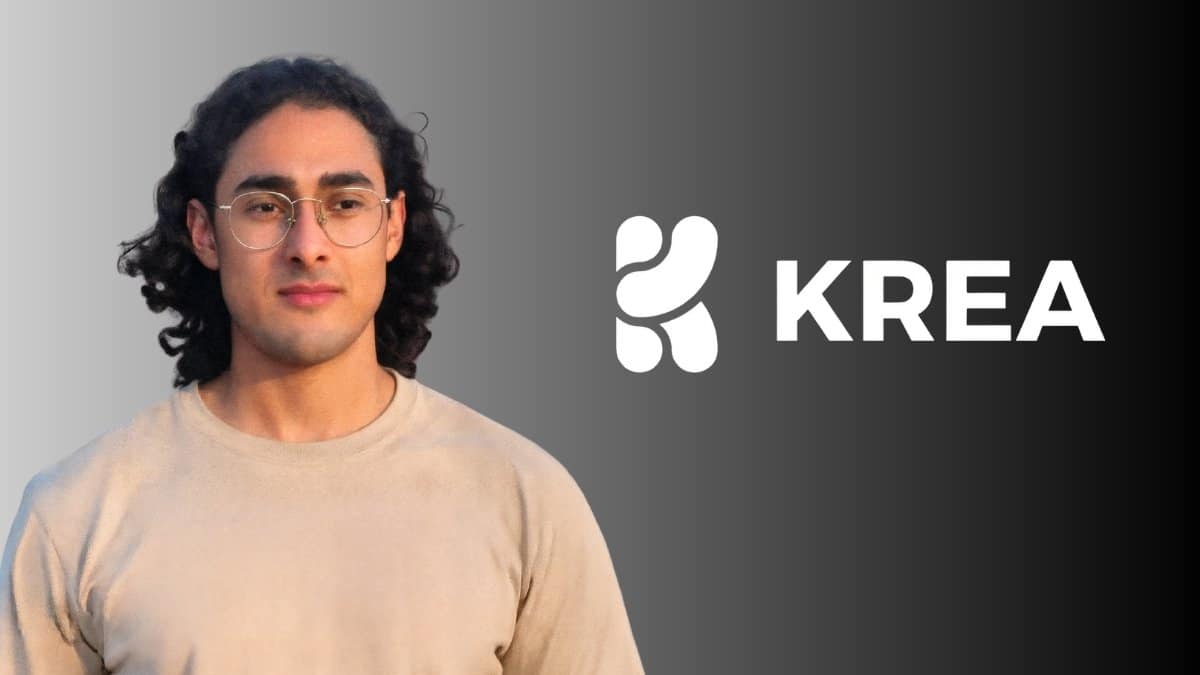
Today I spoke with Diego Rodríguez, co-founder and CEO of Krea, one of the most influential creative artificial intelligence platforms in the world. Krea has reached 20 million users and a valuation of $500 million in barely two years, thanks to a radically different approach: launch before you are ready and learn at speed. In this episode, we talk about the beginnings with no traction, the contrarian decisions that made the difference, and the philosophy behind a startup that today leads its category.
1:22 - Choosing Where to Be and Who to Build with
Diego tells how he chose his university degree by combining engineering and film, and how that decision led him to meet his founding partner.
- How does your environment influence your development as a founder?
- Why is it so important to find your tribe early on?
- How do you know if you are choosing a degree or a city for the right reasons?
The decision to move to San Francisco was key for Krea, driven by advice from Sam Altman and Patrick Collison.
- What makes San Francisco unique as the capital of innovation?
- How do you make a radical decision with limited information?
- What impact did this change have on the opportunities for Krea?
12:45 - Launching Before You Are Ready
After six months with no traction, Diego and his partner built a demo in 24 hours for a party. That changed everything.
- How did they get 100,000 signups in a single day without a finished product?
- What did they do differently in that launch that they had not done before?
- Why does the market reward what gets launched, and not what is perfect?
A counterintuitive decision: kick users off the platform and charge them to get in.
- What effects did restricting access to Krea have?
- How did they use that strategy to create scarcity and urgency?
24:38 - Product Philosophy: Launch Every Week
After several unexpected viral hits, they decided to launch every week, even if the product was not ready.
- How do they identify patterns of success in previous launches?
- What role does speed play in experimentation?
- What kind of mindset helps you launch frequently?
Real-time was one of those ideas: a demo that barely worked became a new standard for the entire industry.
- Why is the speed of feedback key for creative tools?
- What insights about the user experience led them to prioritize what is instant?
34:55 - Learning Faster Than Anyone
Diego describes how to train the mind to keep going in moments of adversity.
- What did he learn from working without results for months?
- How do you use difficulty as a mental gym?
- What did he do differently after having suffered with no progress?
The focus is on assuming ignorance and letting real feedback guide the product.
- How do you decide whether to invest in innovation or in optimization?
- What role does the user play in real-time product development?
42:25 - The Future of Art with Artificial Intelligence
Diego and his partner combine two worlds: engineering and art. Their vision is clear: empower creatives, not replace them.
- What tasks will disappear with AI, and which ones will be amplified?
- How is the role of the artist redefined in this new paradigm?
- What does it mean to build tools for creatives when you are one yourself?
Episode Mentions
You can find Diego on LinkedIn
Discover More of the Startupeable Podcast
Listen to every episode at startupeable.com/podcast.
Subscribe to the newsletter to find out when a new one comes out.
Follow Enzo Cavalie on X: @enzocavalie.